Showing posts with label Haiti Earth Quake. Show all posts

Sponsored Links

11:27 AM (Time in Chile)
You can get information about survivors and victims from the Chilean Embassy in Caracas, Venezuela by calling one of these numbers: 9923378 / 9923378 / 9925364 / 9931538 / 9935770. You can also seek information from the Chilean consulate in the Ecuadoran city of Guayaquil by calling (+593-4) 2564619, 2562995 or e-mailing cggye2@gye.satnet.net

11:24 AM (Time in Chile)
There’s bad news. New death toll: 85, according to the Chilean president. However, worse news is that that number is just from one region – Maule – out of the three that have been severely affected by the Tsunami.


11:10 AM (Time in Chile)
Emergency phone numbers inside Chile have been released. You can call (56) 568 1290 or (56) 568 1295


11:05 AM (Time in Chile)
A resident sits near the debris of a destroyed building below. More pictures from the BBC here and from VOA News here.:


10:40 AM (Time in Chile)


All U.S. Embassy personel, about 118, are accounted for, the U.S. State Dept tells BNO. U.S. State Dept tells BNO the US has no information on american casualties. A warning message has been sent to any americans on the ground.


10:35 AM (Time in Chile)


Update on Airport in Santiago: Newest reports indicate that the airport will now be closed for the next 72 hours.


10:30 AM (Time in Chile)


More news streaming out of Chile report of a dire situation in Concepcion, just 70 miles north of the epicenter of the quake. According to twitter sources, collapsed buildings can be seen in many parts of the city and communications are mostly down. CNN’s Betty Nguyen tweets:
Chile TV reporting 15-story building collapsed near epicenter. Witnesses hearing screams from people trapped inside.


10:25 AM (Time in Chile)
A picture of the damage caused by the earthquake in Santiago:


10:20 AM (Time in Chile)
If you are in the US and want to call Chile and inquire about a loved one, [5:18:50 AM] Dave Siavashi: CNN has provided the following number to call if you’re looking for people in Chile: 1-888-407-4747.


10:15 AM (Time in Chile)
ABS-CBN News reports:
Chile’s remote Robinson Crusoe Island was hit by a huge wave after a massive earthquake rocked the country and aid ships had been sent to the rescue, President Michelle Bachelet said Saturday. The island, part of the Juan Fernandez Archipelago, lies some 700 kilometres out in the Pacific from the Chilean mainland.


10:10 AM (Time in Chile)


10:05 AM (Time in Chile)
Dozens of buildings and bridges have collapsed in Central Chile. The death toll remains at 78 at this point. Dozens, perhaps hundreds of people might be trapped under the rubble. News is slowly trickling out.


10:00 AM (Time in Chile)
In Hawaii, waves of up to 5 meters are expected as the Tsunami travels west through the Pacific Ocean. All coasts of the island are dangerous and should be avoided. The tsunami is expected to make impact in Hawaii just past 11 AM.


9:55 AM (Time in Chile)
Concepcion University is on fire in the city of Concepcion and more images from Chile.


9:47 AM (Time in Chile)
In Concepcion – Chile’s second largest city that lay just 70 miles north of the epicenter of the quake – reports of possible wide-spread destruction abound on Twitter. Some twitterers report that many people are stuck under the rubble of collapsing building and volunteers are trying to help them out. So far, major media outlets have not confirmed this.
9:42 AM (Time in Chile\


The USGC has released a map showing exactly
9:37 AM (Time in Chile)
The deadly tsunami generated by Chile’s earthquake is going to strike the US state of Hawaii later today. If you have a loved one in Hawaii, you can pass this information about the state’s evacuation plan. Click here to view the whole schedule.
9:30 AM (Time in Chile)
The first pictures of devastation from the earthquake are slowly emerging from Chile. You can check the whole batch by CLICKING HERE. A picture from the city of MaipĂș also in Central Chile can be viewed HERE

If you really like this article, please promote this by sharing this on your favorite Social Networking location, by clicking below icons:

Share |

Sponsored Links

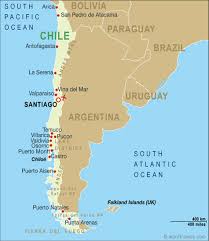
A massive 8.8 earthquake have demolished the South American country of Chile early this morning. The earthquake hit just after 3 a.m. prompting Tsunami warning in areas as far away as the western coast of the United States. The center of the quake hit just 100 miles north from the city southwest city of Concepcion, and caused damaged far into the capital city of Santiago nearly 200 miles away.

Early reports are that 78 people have been confirmed dead, with the death told expecting to rise in the coming days.

Michelle Bachelet, the Chilean President, said an evacuation of coastal areas on Easter Island, the Chilean territory famous for its monumental statues, was under way as the tsunami was expected to make landfall there imminently.


British experts said a tsunami was now radiating from the epicentre towards Hawaii and other settlements on the Pacific Ring of Fire.


The extent of the tsunami's ferocity is not yet known, but it has already reached the southern Juan Fernandez Islands, about 400 miles off the coast of Chile, where it was reported to have caused "serious damage".


The islands include one named after Robinson Crusoe, Daniel Defoe's protagonist, and another named after Alexander Selkirk, the Scottish sailor whose real life experiences as a castaway are said to have inspired the 1719 novel.


An alert was issued by the US Pacific Tsunami Warning Centre which predicted damage to the Hawaiian coast from 9pm GMT today.


"Urgent action should be taken to protect lives and property," the centre said in a bulletin. "All shores are at risk no matter which direction they face."


The centre had earlier issued a tsunami warning for Chile and Peru, and a tsunami watch for Ecuador, Colombia, Antarctica, all of Central America and French Polynesia.


New Zealand also issued a tsunami alert, warning of a wall of water up to 10 feet high, with landfall due there at just after 6pm GMT.


The New Zealand National Crisis Management Centre warning said the greatest wave heights were expected between six and 12 hours after the initial arrivals.


Dr Brian Baptie, the British Geological Survey's Head of Seismology, said: "This is largest earthquake to strike central Chile since a magnitude 6.7 earthquake in 2001.


"A 1.3 metre tsunami wave was observed at Valparaiso, 200 kilometres north of the epicentre about 20 minutes after the earthquake.


"Tsunami waves in the deep ocean travel about the same speed as a jet plane and would take about 15 hours to reach Hawaii and about 20 hours to reach the other side of the Pacific."

If you really like this article, please promote this by sharing this on your favorite Social Networking location, by clicking below icons:

Share |

Sponsored Links

High 8.8 Magnitude Earth Quake | Chile in Pathetic Condition | Fears that Chile will be another Haiti | Hundreds Under Collapsed Buildings | Tsunami Threat in all Sournding Countries | High Alert in the Region | Santiago, the Capital City is the Country, is Most Devastated.

SANTIAGO  : A huge 8.8-magnitude earthquake rocked Chile
early Saturday killing at least 78 people, toppling buildings and triggering a tsunami threatening the Pacific rim of fire, officials said.


The massive quake plunged much of the Chilean capital, Santiago, into darkness as it snapped power lines and severed communications.

Agence France-Presse journalists spoke of walls and masonry collapsing while people in pyjamas fled onto the streets.


Television images showed destroyed or heavily damaged buildings and debris-strewn streets.


Residents in the south of the city, which appeared to have borne the brunt of the quake, said roads had crumpled and a bridge had been damaged, as an AFP correspondent said buildings "shook like jelly."


The US Pacific Tsunami warning center issued a "widespread" tsunami warning for all Pacific nations.


A partial evacuation of Easter Island has been ordered in Chile in the face of possible big tidal waves, President Michelle Bachelet announced.


She also said two ships with aid had been dispatched to Robinson Crusoe Island, part of the Juan Fernandez Archipelago, which has been affected by a big tidal wave.


Japan's meteorological agency warned of a tsunami risk across large areas of the Pacific including as far away as the Antarctic, as the Philippines warned low-lying coastal areas to prepare for possible evacuation.


The Philippine Institute of Volcanology and Seismology said that the tremor could generate a destructive tsunami that could hit coastlines on the eastern side of the archipelago.


"No evacuation order is in effect but communities along the east coast of the country are advised to wait for further information and to prepare for possible evacuation," Phivolcs said in an advisory.


Phivolcs Director Renato Solidum told the Inquirer that the issuance of the tsunami alert at 3:10 p.m. is standard operating procedure for the Phivolcs. “This is to remind the public that there was a strong earthquake in another part of the world that could cause a tsunami. It would be best for the public to be prepared.”


He added that in 1960, a magnitude 9.5 earthquake hit Chile, the strongest recorded earthquake in history. That quake caused waves as high as six meters to reach the country 24 hours after the actual quake. “We cannot lower our guard here.”


Australia and New Zealand issued tsunami alerts while Russia said it was monitoring the risk.


The tremor struck at 3:34 am local time (0634 GMT) when many Chileans were still in nightclubs partying at the start of the weekend.


It was swiftly followed by a series of aftershocks ranging from 5.6 to 6.9 on the Moment Magnitude Scale.


Chilean President Michele Bachelet and her officials rushed to their offices to coordinate disaster relief, state television said, as the powerful aftershocks panicked the quake-prone Latin American country.


"With the quake of this magnitude and given its timing, we cannot rule out other casualties," Bachelet said as first reports came in of deaths.


Santiago lies 325 kilometers (200 miles) northeast of the epicenter of the quake, which hit at a depth of 35 kilometers (21.7 miles).


It struck 100 kilometers (60 miles) northwest of the Chilean town of Chillan, the US Geological Survey said, and 115 kilometers (70 miles) northeast of Concepcion, a city of about a million people.


"Sea level readings confirm that a tsunami has been generated which could cause widespread damage," the US Pacific Tsunami Warning Center said.


Authorities should take "appropriate action," it added, but said the warning did not apply to the west coast
of the United States.

If you really like this article, please promote this by sharing this on your favorite Social Networking location, by clicking below icons:

Share |

Sponsored Links

Photographers from across the globe descended on Haiti last month after the earthquake. As the death toll grew, more photographers arrived — some with a deep history of working in Haiti or in conflict zones, some with neither. Some photographers were sent on assignment, supported by the budgets of large news organizations. Some went on their own dime.
At one point there were almost certainly too many photographers in Haiti. But which point?
This question is scarcely new. It attends every war, every conflict; each famine, disaster and political upheaval.
“I think it goes without saying that I believe it important that photographers are there to document the event,” said Uriel Sinai, a photographer for Getty Images, who was there.
Few would disagree. But the scope of coverage in Haiti seems to exist on a different scale. Ron Haviv of the VII agency said that in times of crisis, Haiti is a “haven for photographers.”
“Amazing story, people and images are there,” said Mr. Haviv, who has been traveling to Haiti for 20 years and made pictures there after the earthquake. “Being so accessible and inexpensive has always led to an abundance — and sometimes overabundance — of photographers during the various coups, insurrections and natural disasters. Quite often during these times, it was normal for three to six photographers, plus the occasional TV crew, to be all working the same scene.”
Mr. Sinai acknowledged that “it feels awkward when you get to a scene of violence, tragedy, or chaos, et cetera, and there are more photographers around a subject than there are even people at the scene.”

“When you are there in the moment, and there are photographers crawling all over the place, it simply feels weird,” he said.
It’s worth noting that in troubled areas around the world — not just Haiti — numerous photographers often are in the same place at the same time, frequently traveling there together.
“First and foremost, it’s an issue of safety,” said David Gilkey, a photographer for National Public Radio. But he does not see this as an impediment to good coverage. “Even though you are traveling with another photographer, you are almost never duplicating each other’s work,” Mr. Gilkey said. “While two people may be looking at the same thing, they’re seeing it in different ways.”
More than a dozen photographers covered the landing of U.S. troops at the ruined National Palace on Jan. 19. The scene recalled a photograph by Alex Webb of American soldiers landing on the beach in Haiti in 1994, facing what looked like a battery of news photographers. This year, many photographers were drawn to a statue, untouched by the earthquake, standing solemnly amid the destruction. Besides those in the slide show, other versions were taken by James Nachtwey, Charles Ommanney and Riccardo Venturi.
There is no question a tragedy of this magnitude demands a thousand eyes or even more. But do they all have to be staring at the same thing? When does redundant become intrusive?
Some photographers drew the line at themselves. Despite having worked in Haiti many times, for instance, Christopher Anderson of Magnum decided to avoid the earthquake and its immediate aftermath. “I have never felt comfortable covering natural disasters,” he said.
Paradoxically, the question could soon become: are there enough photographers covering Haiti?
As celebrity television journalists begin to leave and the spotlight on Haiti dims, photography, in many ways, becomes even more crucial. Lynsey Addario, who arrives in Haiti Thursday on assignment for The New York Times, said she felt conflict about not going just after the earthquake struck. But she realized that important stories will need to be told as the recovery continues.
“While the first phase of the Haiti story is coming to an end, there is a whole new stage of people moving on with their lives, and trying to rebuild what they can in a totally shattered psychological and physical infrastructure,” Ms. Addario said. “I sometimes feel I can be a more effective photographer, and do more in-depth coverage, if I do spend more time on stories without the ‘pack’, and choose subjects that I feel are lacking coverage.”
“There will be many quiet, important features to do.”

(C) New York Times

If you really like this article, please promote this by sharing this on your favorite Social Networking location, by clicking below icons:

Share |

Sponsored Links

Death toll Rises.

Haiti's earthquake may have killed up to 200,000 people, according to the government. More than 50,000 bodies have already been collected to be buried in mass graves.

The government has given the United States control over its main airport to coordinate the international relief effort. Aid supplies are being flown in from all over the world but their distribution is being hampered by chaos and disturbances.

The US is sending 10,000 troops to Haiti to help distribute emergency supplies and maintain order. In the capital Port-au-Prince gangs of youths are reported roaming the streets armed with machetes. A UN warehouse has been plundered and shops are being looted. UN relief workers say many survivors are angry that it's taking so long for aid and supplies to reach them.

UN Secretary-General will visit the disaster area on Sunday. US Secretary of State Hilary Clinton is travelling to Haiti later today.

Looters Rule the Street.


Looters and robbers are ruling the Haitian streets days after the devastating earth quake. People are robbing the shops and collapsed supermarkets just for eatables to survive.

A looter trying to nab eatables with his knife. (c) Reuters

One rioter, a man in his 30s, was killed outright by bullets to the head as the crowd grabbed produce in the Marche Hyppolite.

Another looter quickly snatched the rucksack off the dead man's back as clashes continued and police reinforcements descended on the area armed with pump-action shotguns and assault rifles.

It came as predictions of the death toll from the Haitian earthquake rose to 200,000 as mounting desperation at lack of aid threatens to tilt the country into anarchy.

With up to three million survivors still cut off from outside rescue efforts, the United Nations said the disaster was the worst it had ever dealt with.

Aid officials fear a lapse into all-out lawlessness in coming days unless US troops can get through with vital food, medicine and water deliveries, which are being hampered by the sheer scale of devastation. There were continued incidents of looting, and isolated reports of rescue workers being stoned by angry crowds.

The UN's warning came as the full picture of the horror in the flattened capital of Port au Prince emerged. Haitian ministers claimed the body count could rise far beyond the 50,000 estimate made by the Red Cross officials on Friday, saying that 50,000 bodies had already been buried. Trucks piled high with corpses delivered them to mass graves outside the stricken city, with thousands more still lying uncollected on the streets or buried under heavy rubble.

"We have already collected around 50,000 dead bodies," said interior minister Paul Antoine Bien-Aime. "We anticipate there will be between 100,000 and 200,000 dead in total, although we will never know the exact number."

If that casualty count is confirmed, it would make Tuesday's 7.0 magnitude earthquake one of the ten deadliest on record. The death toll would also rival that of the 2004 Indian Ocean tsunami, which claimed roughly 250,000 lives. However, officials with knowledge of both incidents said the Haitian disaster - which hit a country already barely functional - posed an infinitely tougher relief challenge.

"This is a historic disaster," said UN spokesman Elisabeth Byrs, whose own organisation has lost 36 local staff in the earthquake. "We have never been confronted with such a disaster in the UN memory. It is like no other."

The UN undersecretary general for peacekeeping, Alain Le Roy, added: "There have been some incidents where people were looting or fighting for food. They are desperate, they have been three days without food or any assistance.

Paul Antoine Bien-Aime, Interior Minister had stated earlier, "We have already collected around 50,000 dead bodies. We anticipate there will be between 100,000 and 200,000 dead in total, although we will never know the exact number. " Aramick Louis, the Haiti Secretary of State for Public safety has confirmed that about 40,000 bodies have already been buried in mass graves in the Carribean nation.

These figures in regards to Haiti earthquake death toll has, already put this earthquake and its subsequent aftershocks on the list of ten deadliest earthquakes ever recorded, as per reports.

Even as relief work still continues and the country has begun recuperating with authorities asessing damages, a more worrying report has come into the news. Incidents of robberies and looting by bandits are on the rise, especially targeting those Haiti earthquake victims and survivors who have moved into camps on streets and sidewalks. Such looting has happened even in the capital city of Port au Prince. (c) Various Sources.

If you really like this article, please promote this by sharing this on your favorite Social Networking location, by clicking below icons:
Share |

Sponsored Links

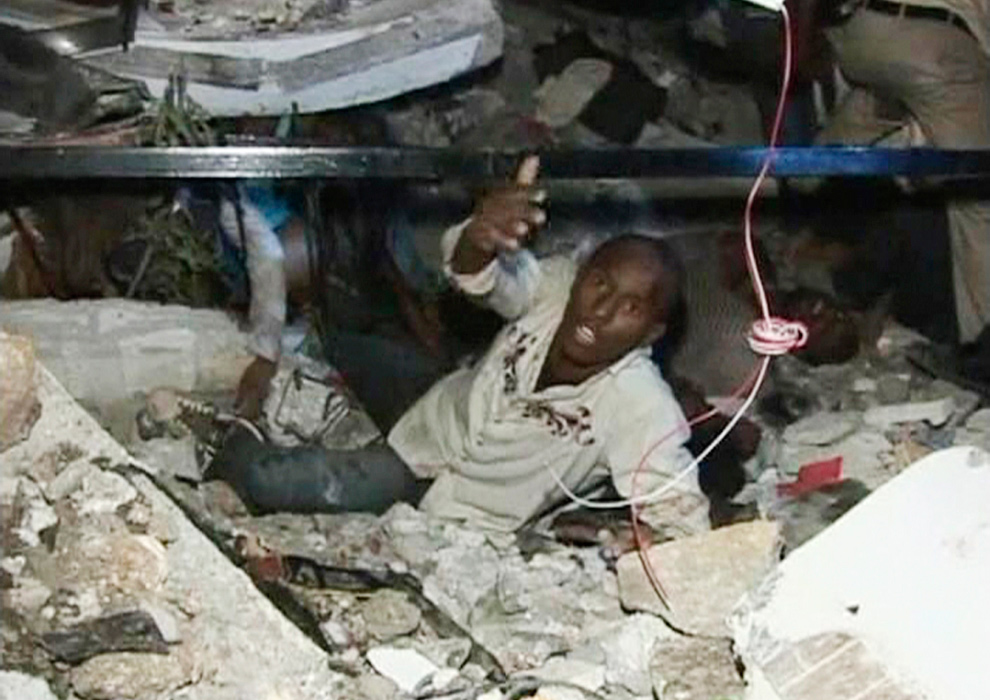
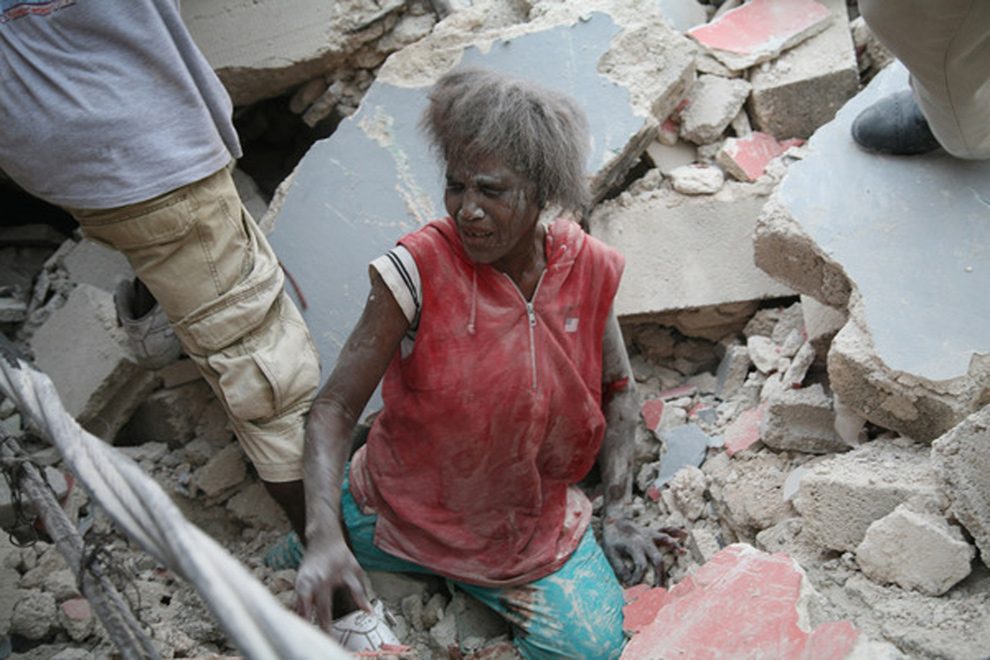
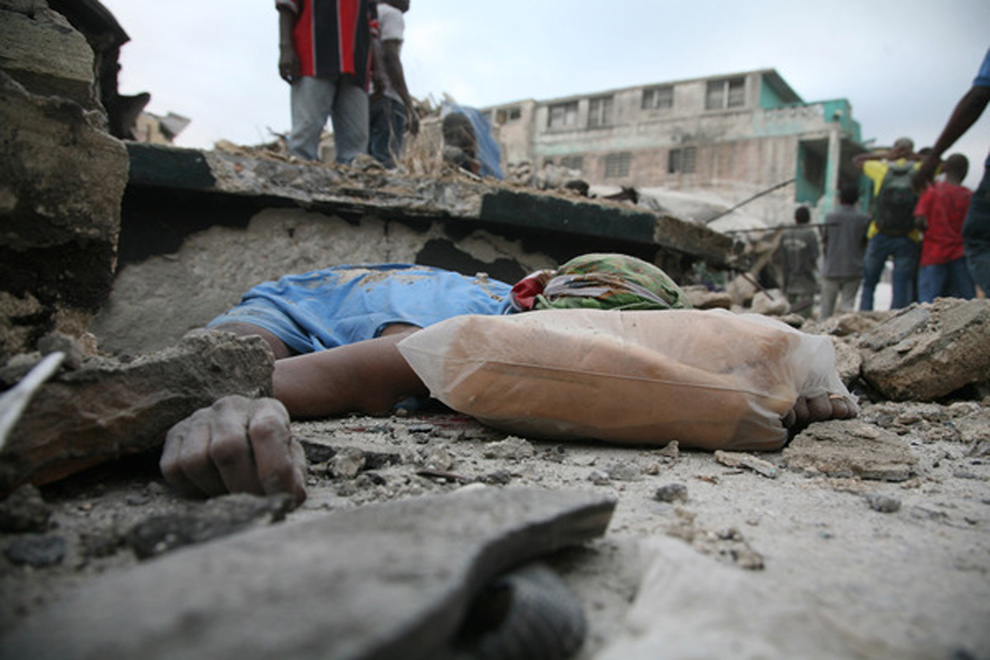
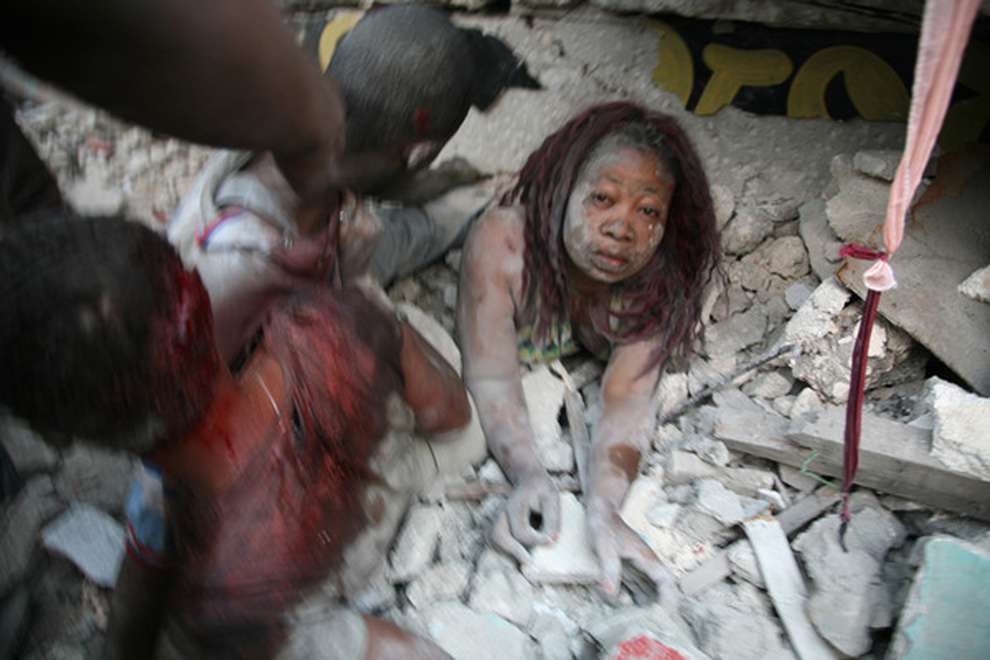
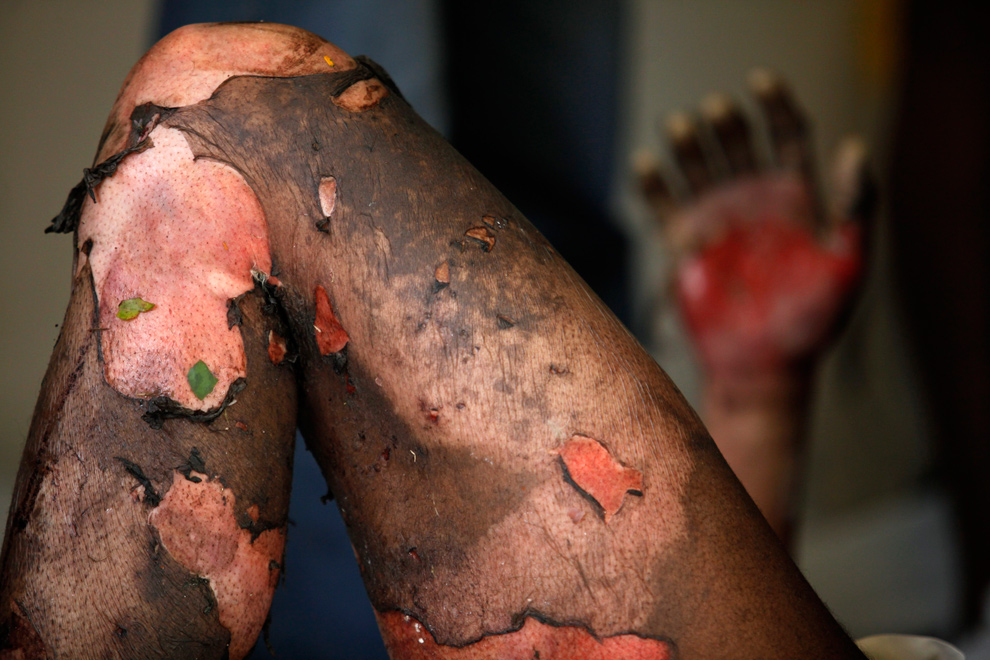
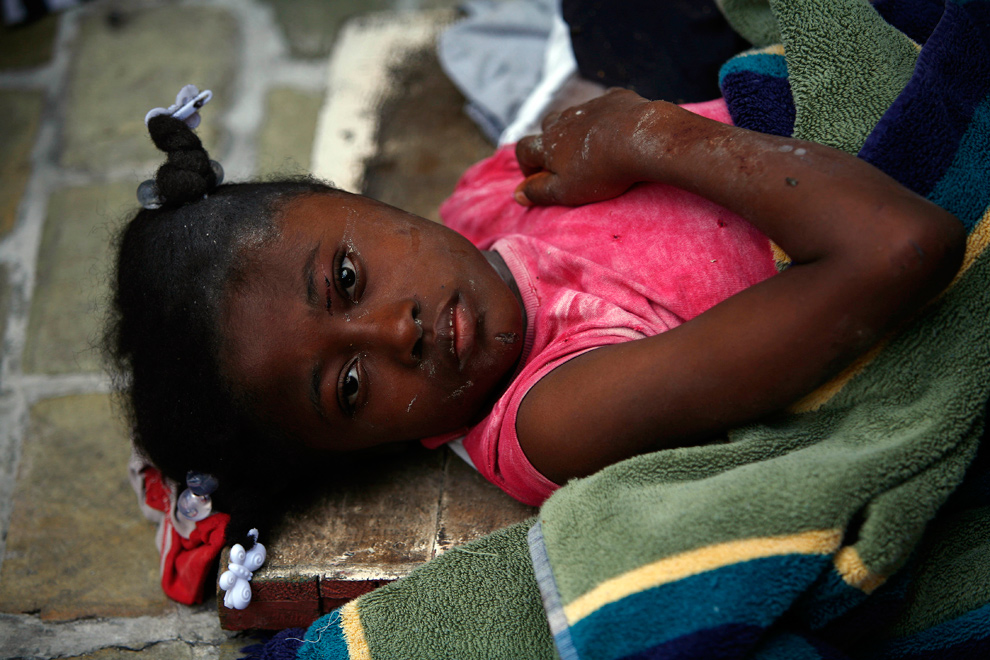
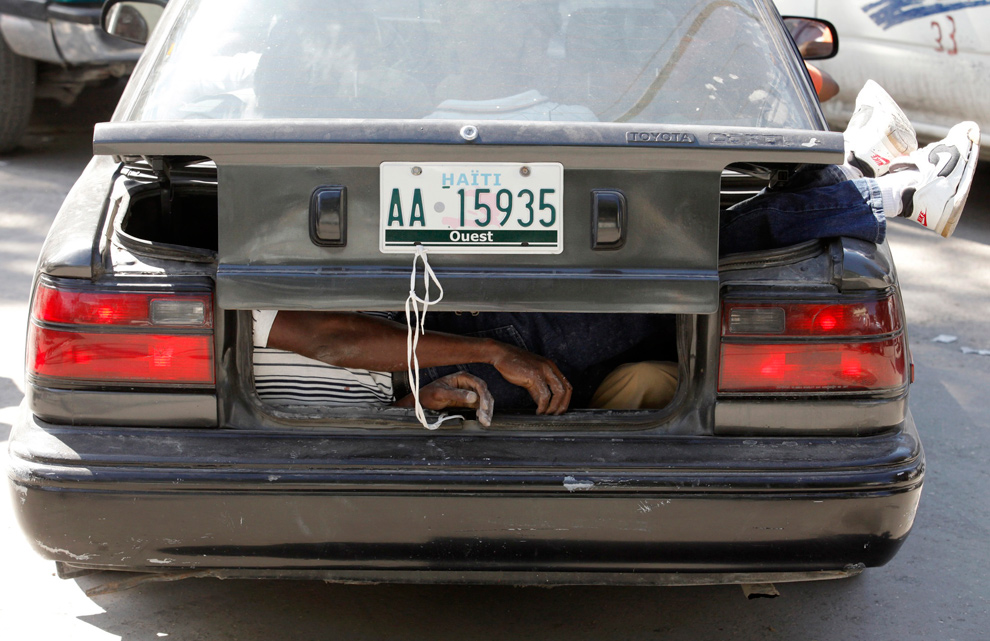
After the most devastating earth quake in the careebian Island State, Haiti; The pictures which are coming thorough various internet sources are terribly shocking. It says the people of this poor country is really in the need of the world's help. Below are some of the pictures two days after the earth quake.

Click on the Image to Enlarge

A burnt leg of a boy, waiting for first aid in a hospital in Port au Prince.

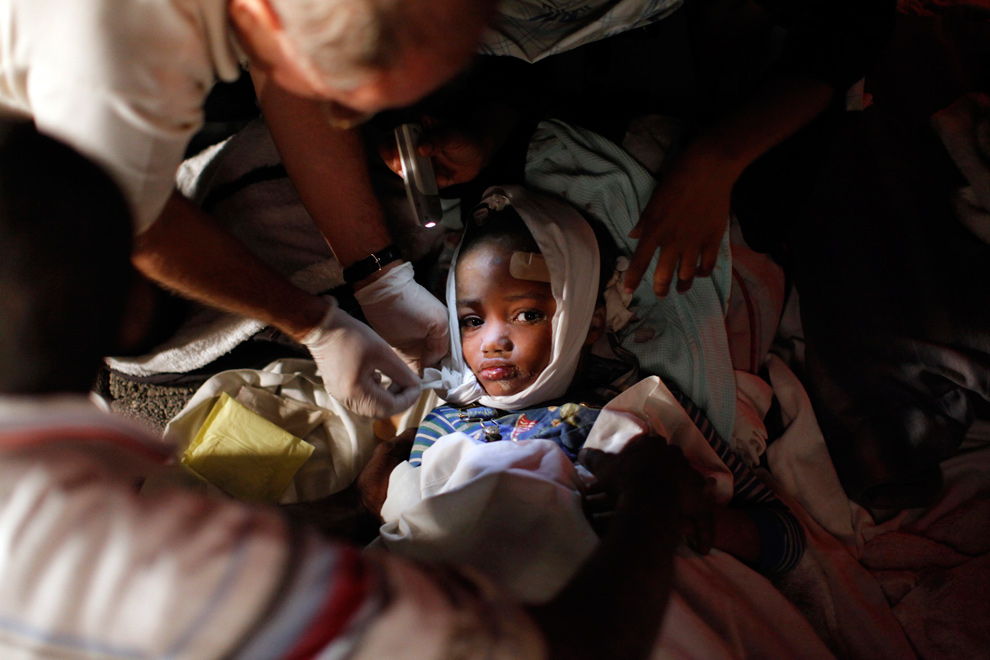
a girl looking at the world for their sympathy, in a temperory medical camp in Haiti.

Deadbodies are carried in a car by the rescue team.


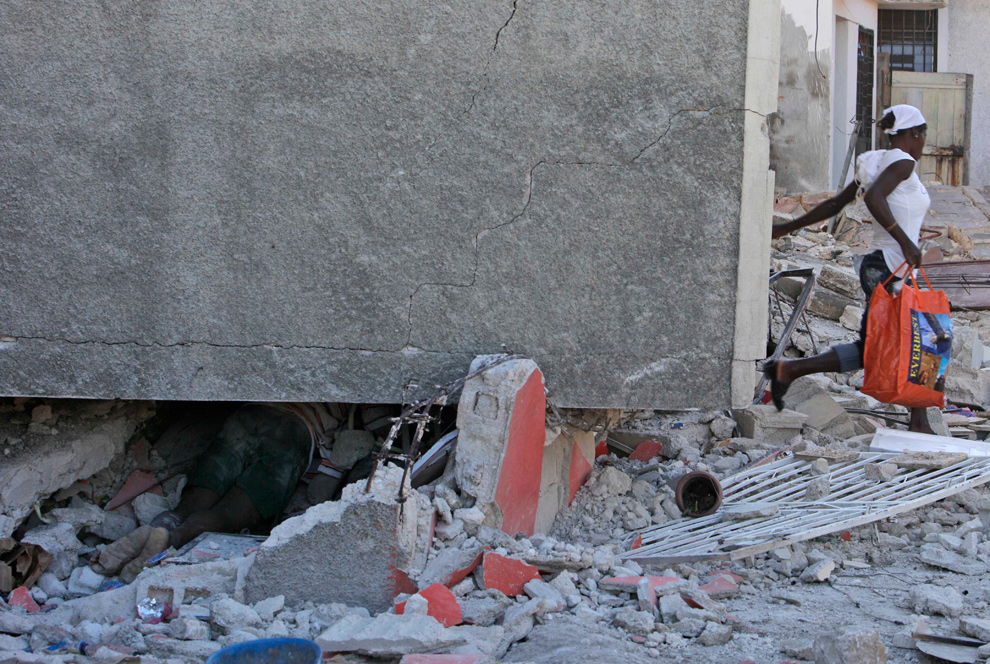
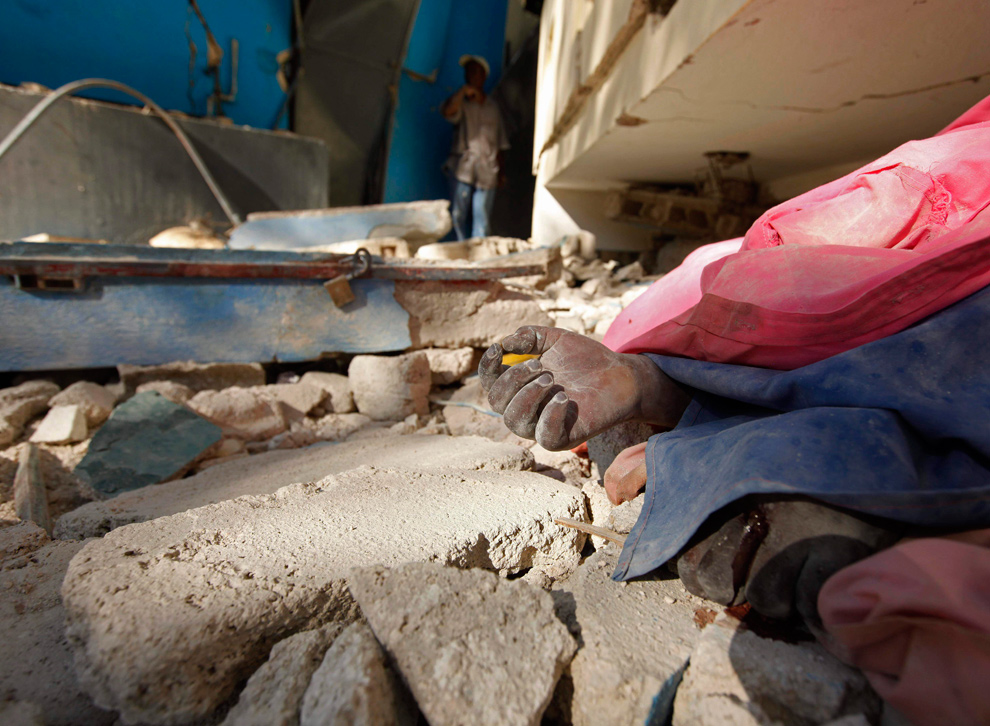
A dead body inside the debris of the collapsed buildings.


A woman runs after a deadbody under the debris of a building.


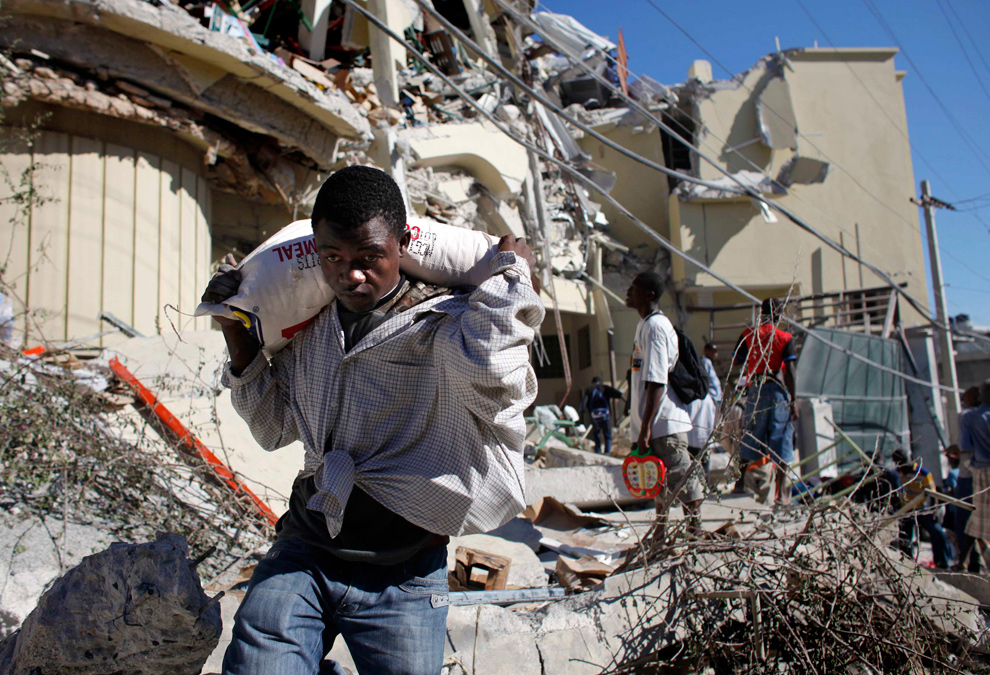
A man looting eatables from a collapsed supermarket.

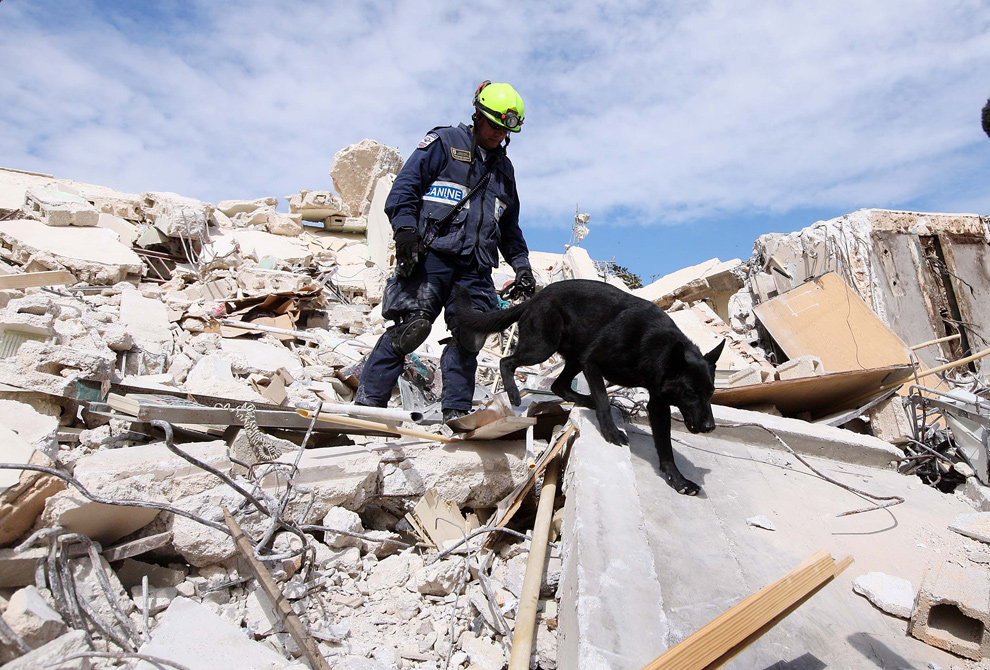
An Indian rescue force member searching for survivors with the help of snifer dog.

(c) various internet sources.

If you really like this article, please promote this by sharing this on your favorite Social Networking location, by clicking below icons:
Share |

Sponsored Links

Reports gathered from various sources:

The most devastating earth quake of the new decade in Haiti, is claiming more and more lives after hours being passed. The poorest country in the American hemisphere is raising hands towards the world community for help. The only thing they can console is United States is next door to them, but china being first country to send their rescue team to the destroyed land of Haiti.

Haiti earthquake death toll remains anyone's guess as bodies are still lying in the streets. However, today Haitian Red Cross estimated up to 50,000 people could be dead and another three million hurt or displaced.

Haiti earthquake death toll was believed to be in the tens of thousands. However, it seems to be too early to tell as many bodies are still lying out in the streets. CNN correspondent Dr. Sanjay Gupta Tweeted from the ground in Haiti today, saying he has never seen what he saw in Haiti.
Meanwhile, Haitian Red Cross believes between 45,000 and 50,000 people have been killed. It also estimates that three million people have been either hurt or left homeless as the result of the earthquake. There were reports of a thousand bodies lying outside Port-au-Prince General Hospital.
The highest death toll from a natural disaster in recent history is that from the 1931 China floods that have killed close to four million people.
Authorities suppose death toll will exceed 500 000, barricades from bodies are built in disaster area

Haitian Red Cross estimated that 50,000 lost their lives in the deadly earthquake, but the government expects the death toll will exceed 500 000, APA reports. Three million suffered from the earthquake.

First mass funeral was served in the country on Thursday. Haitian president Rene Preval said 7000 bodies were buried in the mass graves. UN mission in Haiti made new announcement about its losses during the earthquake. 36 UN workers were killed and 73 injured, 160 are still missing, including 8 workers of UNESCO mission in the country. 57-year old worker of the US State Department Victoria Delong was also among the quake victims in Haiti, US embassy’s three staff members became missing.

There are serious problems with landing of planes carried humanitarian assistance as the quake damaged a runway strip of the Port-au-Prince airport. Some of the planes couldn’t leave the Haitian airport because lack of fuel resources. Planes carrying humanitarian assistance to Haiti are forced to land in the neighboring Dominican Republic delivering shipment to Haiti via land transport.

French president Nicolas Sarkozy called for international conference on Haiti and said he was discussing his proposal with the world leaders now. US Deputy Secretary of State Philip Crowley said there were few cases of marauding in the disaster areas. He said air and landing forces would be deployed in the region to provide security and public order, as well as to participate in rescue and humanitarian operations.

There is unbearable sanitary in Haiti. Leaving bodies still at the streets caused serious protest among the population. The people are building barricades from bodies to express their protests. Mexican ambassador to Haiti Everardo Suarez told journalists that authorities couldn’t organize funerals. “There are hundreds of bodies at the streets and serious problems with water supply, electric energy and medical aid. People fear to take the streets because of large groups of marauders there”, said the ambassador.


(c) Various Sources.

If you really like this article, please promote this by sharing this on your favorite Social Networking location, by clicking below icons:
Share |

Sponsored Links


Tuesday afternoon, January 12th, the worst earthquake in 200 years - 7.0 in magnitude - struck less than ten miles from the Caribbean city of Port-au-Prince, Haiti. The initial quake was later followed by twelve aftershocks greater than magnitude 5.0. Structures of all kinds were damaged or collapsed, from shantytown homes to national landmarks. It is still very early in the recovery effort, but millions are likely displaced, and thousands are feared dead as rescue teams from all over the world are now descending on Haiti to help where they are able. As this is a developing subject, I will be adding photos to this entry over the next few days, but at the moment, here is a collection of photos from Haiti over the past 24 hours.

Live update on Haiti Earth Quake..
The US army is sending up to 3,500 soldiers to Haiti, officials quoted by Reuters say. The first 100 are scheduled to arrive soon.

5 Haitian actor Jimmy Jean-Louis, who starred in the Heroes TV series, tells CNN he has not been able to contact his parents in Petionville since the quake. "I don't think people have any idea how terrible this is," he says.

comment from blogger
1 Sebastien Barrau, a Haitian living in Miami, has started up a website for missing persons. He says: "I'm really disappointed - there are so few survivors. I spoke to a friend who helped get five people out of a collapsed supermarket, just five people. I've heard about people being alive one day and stuck under the rubble, but who don't make it."

1319 Troylivesay tweets: "Yesterday there was only one gas station operating in town that I saw and it was a mob scene. No violence but it was very intense."

1315 Churches, barber shops and small shops in Haitian areas of Miami have been collecting donations to send to friends and relatives. "My body is in Miami but my mind is in Haiti," Fletcher Toussaint, a young immigrant, tells the BBC.
Awaiting news from home

1310 Two days after the disaster struck, people speak of still hearing voices crying from the rubble.

1309 Google and Geoeye have put together some new satellite images of Haiti, taken after the quake and showing the extent of the destruction.

1303 The foreign minister of Indonesia - a country which has suffered natural disasters in the past - expressed condolences to Haiti. "As a country that has been itself devastated by a similar situation, we are absolutely saddened by what's happening in Haiti," said Marty Natalegawa.

57 Haitian DJ Carel Pedre tells BBC's Newshour he has seen a lot of dead bodies and collapsed buildings. "I've seen thousands of people crying for help, I've seen thousands of people homeless, helpless. I see a country devastated, I see - wow - I have witnessed a disaster and I think that's the biggest disaster I've ever seen in my life."

54 The UN says up to 200 of its staff, including peacekeepers, are unaccounted for. Between 50 and 100 could be trapped in the UN building in Port-au-Prince.

tweet
53 Troylivesay tweets: "Currently experiencing another aftershock - they are still coming - had a couple strong ones yesterday and last night."
(c) Various Sources

If you really like this article, please promote this by sharing this on your favorite Social Networking location, by clicking below icons:
Share |

Related Posts Plugin for WordPress, Blogger...